
ERN ITHACA
Contatti CPMS ILIAD Area riservata ai membri
  • Chi siamo
    • Chi siamo
    • Cosa sono gli ERN?
    • I nostri centri di competenza dell’UE
    • Le nostre associazioni di pazienti
    • Le nostre collaborazioni con l'UE
  • I nostri gruppi di lavoro
    • Disturbi dello sviluppo neurologico (WG5)
    • Spina bifida e altri disrafismi (WG13)
    • Medicina e patologia fetale (WG6)
    • Assistenza sanitaria e CPMS 2.0 (WG4)
    • Linee guida e consenso (WG11)

    • Istruzione e formazione (WG8)
    • APOGeE (WG9)
    • Certificato europeo (WG10)

    • Ricerca e innovazione (WG12)
    • Registri (WG7)
  • Le nostre attività di ricerca
    • Registro ILIAD
    • Inviti alla collaborazione
    • Pubblicazioni
    • Incontro di ricerca ITHACA
  • Linee guida
    • Metodologia
    • Linee guida ERN ITHACA
    • Linee guida approvate
    • Percorsi dei pazienti
  • Istruzione
    • Corso online di genetica APOGeE
    • Guida pratica alla genetica
    • Corso di medicina genomica di precisione dell'ESHG

    • MOOC “Diagnosi delle malattie rare”
    • MOOC “bioinformatica”
    • "La mezz'ora della genetica" – un corso biennale di genetica clinica

    • Aggiornamenti su Orphanet
    • Database SysNDD

    • Scambi di formazione

    • Video didattici
    • I figli della genetica
  • Notizie ed eventi
    • Webinar
    • EuroDysmorpho 2026
    • Riunione NSEuronet

    • Eventi
    • Notizie
  • Chi siamo
    • Chi siamo
    • Cosa sono gli ERN?
    • I nostri centri di competenza dell’UE
    • Le nostre associazioni di pazienti
    • Le nostre collaborazioni con l'UE
  • I nostri gruppi di lavoro
    • Disturbi dello sviluppo neurologico (WG5)
    • Spina bifida e altri disrafismi (WG13)
    • Medicina e patologia fetale (WG6)
    • Assistenza sanitaria e CPMS 2.0 (WG4)
    • Linee guida e consenso (WG11)

    • Istruzione e formazione (WG8)
    • APOGeE (WG9)
    • Certificato europeo (WG10)

    • Ricerca e innovazione (WG12)
    • Registri (WG7)
  • Le nostre attività di ricerca
    • Registro ILIAD
    • Inviti alla collaborazione
    • Pubblicazioni
    • Incontro di ricerca ITHACA
  • Linee guida
    • Metodologia
    • Linee guida ERN ITHACA
    • Linee guida approvate
    • Percorsi dei pazienti
  • Istruzione
    • Corso online di genetica APOGeE
    • Guida pratica alla genetica
    • Corso di medicina genomica di precisione dell'ESHG

    • MOOC “Diagnosi delle malattie rare”
    • MOOC “bioinformatica”
    • "La mezz'ora della genetica" – un corso biennale di genetica clinica

    • Aggiornamenti su Orphanet
    • Database SysNDD

    • Scambi di formazione

    • Video didattici
    • I figli della genetica
  • Notizie ed eventi
    • Webinar
    • EuroDysmorpho 2026
    • Riunione NSEuronet

    • Eventi
    • Notizie
CPMS ILIAD Area riservata ai membri Contatti
Home > Linee guida > Linee guida ERN ITHACA

Linee guida ERN ITHACA

ERN-ITHACA clinical practice guidelines and experts consensus statements

Linee guida per la pratica clinica (CPGs) and experts consensus statements (ECSs) are recommendations on how to diagnose and treat a medical condition. They are written by medical experts with the support of patient’s representatives, and are directed to doctors, nurses or any kind of health care professionals.  

A CPG summarizes the current medical knowledge on a given disease, weights the benefits and harms of diagnostic procedures and treatments, and give specific recommendations based on this information. 

The ITHACA Guideline workgroup works on identifying and subsequently targeting a number of areas where the development and implementation of standardized consensus statements would most benefit the community of patients and families affected by developmental disorders and intellectual diability.

So far, the workgroup has put together 10 groups of multidisciplinary experts to work on the writing of 10 new clinical practice guidelines. 5 of them have already been achieved. They are consultable below:

Beckwith-Wiedemann
syndrome
April 2018
Valproate
embryopathy
October 2018
Cornelia de Lange
syndrome
July 2019
Phelan-McDermid
syndrome
May 2023
Rubinstein-Taybi
syndrome
May 2024
Spinal dysraphisms in children
and adolescents
February 2025
Kleefstra
syndrome
January 2026
Transition
from Children to Adults’
healthcare
March 2026

Clinical practice guidelines and experts consensus statements co-produced by ITHACA

Bardet-Biedl
syndrome
April 2018

Websites with Guidelines & Consensus Statements available on the Web

In addition to developing these consensus statements, we are also looking at those already in existence in all Member States, how we can endorse their content and translate them, and how we can ensure they reach the widest possible audience. With this in mind, we would like to highlight below some guides which we think you may find useful and that our network will be considering for endorsement in the future.
Orphanet

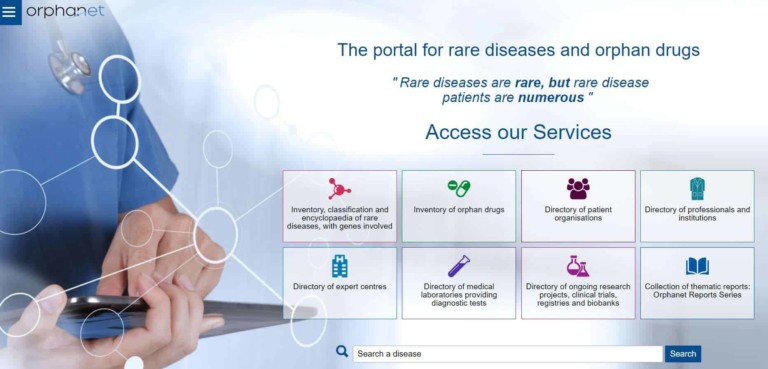
Orphanet is a European website that provides an inventory and classification of rare diseases (RDs), with each entry having its own ORPHA code, an encyclopaedia of expert-authored and peer-reviewed review articles, various clinical guidelines, diagnostic criteria, guidance for genetic testing, disability factsheets etc., and a directory of services (clinics, laboratories, research projects, registries, clinical trials, patient organisations).

ITHACA is a partner of ORPHANET to support RD encyclopaedia and to enrich its entries regarding disorders covered by ITHACA : 72 summaries have been reviewed and updated so far.
Genereviews

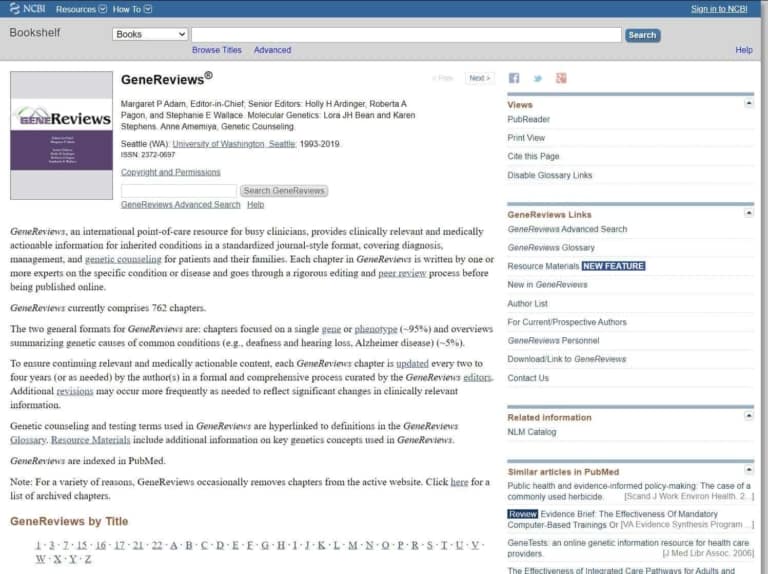
GeneReviews is an international point-of-care resource consisting in an online database containing standardized peer-reviewed articles that describe specific heritable diseases. It was established in 1997 as GeneClinics by Roberta A Pagon (University of Washington) with funding from the National Institutes of Health. Its focus is primarily on single-gene disorders, providing current disorder-specific information on diagnosis, management, and genetic counseling. Links to disease-specific and/or general consumer resources are included in each article when available. The database is published on the National Center for Biotechnology Information (NCBI) Bookshelf site. Each chapter is written by one or more experts on the specific condition or disease and goes through a rigorous editing and peer review process before being published online. Articles are updated every two or three years or as needed, and revised whenever significant changes in clinically relevant information occur. Articles are searchable by author, title, gene, and name of disease or protein, and are available free of charge.

Genereviews provides clinically relevant and medically actionable information for inherited conditions in a standardized journal-style format, covering diagnosis, management, and genetic counselling for patients and their families. GeneReviews currently comprises almost 800 chapters, that follow two general formats: 1) chapters focused on a single gene or phenotype ; 2) overviews summarizing genetic causes of common conditions.

Iscriviti alla newsletter di ERN-ITHACA

L’ERN ITHACA è una delle 24 Reti di riferimento europee (ERN) approvate dal Consiglio degli Stati membri dell’ERN. Le ERN sono cofinanziate dalla Commissione europea. Per ulteriori informazioni sulle ERN e sulla strategia sanitaria dell’UE, visitare il sito http://ec.europa.eu/health/ern

Dichiarazione di non responsabilità: I contenuti presenti su questo sito web riflettono le opinioni della rete e sono di sua esclusiva responsabilità; essi non possono in alcun modo essere interpretati come espressione delle opinioni della Commissione europea o di qualsiasi altro organo dell’Unione europea.

Il logo ITHACA è stato creato da George Quiney e Angelina Bauder

europe
ern-ithaca
Note legali Informativa sulla privacy Mappa del sito
Italian
English German Spanish French