
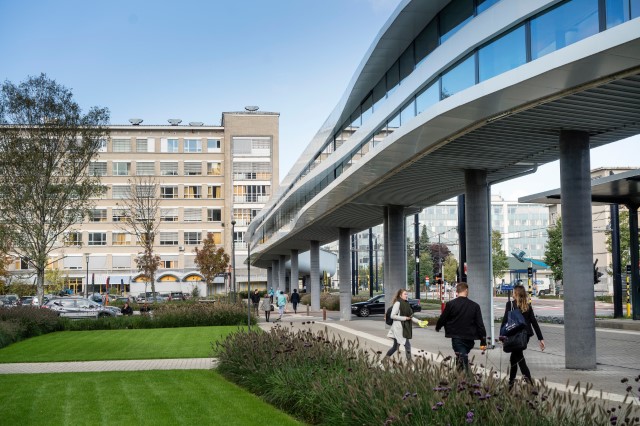
Center for Medical Genetics
UZGent – Ghent University Hospital
C. Heymanslaan 10
9000 Ghent
BELGIUM
Plomo

Pr Dr Bert Callewaert
Teléfono: +32 9 332 36 03
Fax: +32 9 332 65 49
eMail: info.cmgg@uzgent.be
Ámbito de aplicación
El ámbito de especialización de nuestro centro, como miembro de la Red Europea de Referencia (ERN) ITHACA, abarca todos los síndromes que presentan anomalías del desarrollo y/o discapacidad intelectual (DI). Aproximadamente 1 de cada 40 recién nacidos presenta una malformación congénita (261 de cada 10 000 fetos y recién nacidos, según los informes de EuroCAt), y 1 de cada 40 presenta DI. Por lo tanto, entre 3 y 5 % de todos los nacimientos humanos presentan o desarrollarán una anomalía del desarrollo, de las cuales al menos entre 25 y 50 % son de origen genético o genómico. Esta enorme población representa, en realidad, la yuxtaposición de un número muy elevado de trastornos raros a nivel individual que presentan una diversidad extrema de causas y fenotipos. La competencia y el ámbito de especialización de este centro ITHACA incluyen:
- más de 5.500 síndromes dismórficos y de anomalías congénitas múltiples (MCA), entre los que se incluyen más de 3.000 enfermedades monogénicas, todas las anomalías cromosómicas (la mayoría de ellas detectables únicamente mediante tecnologías de microarrays), anomalías dismórficas multifactoriales y esporádicas, y embriopatías de origen ambiental
- >3.000 formas monogénicas y cientos de formas cromosómicas de discapacidad intelectual, con o sin trastorno del espectro autista (TEA) asociado
Atención a los pacientes
The Center for Medical Genetics Ghent (CMGG) offers consultations for children and adults including diagnostic consultations, presymptomatic testing, carrier screening, genetic counselling, prenatal testing and pre-implantation testing. The clinical department ten clinical geneticists, each with specific expertises, six residents in genetics, three genetic counselors, two psychologists and two physiotherapists.
We further offer multidisciplinary consultations with (pediatric) orthopaedic and maxillofacial surgeons, (pediatric) endocrinologists, (pediatric) nephrologists and dermatologists. We collaborate closely with all other clinical services at the department to address the multidisciplinary medical needs of patients, including paramedic expertise such physiotherapists, social workers, nutritionists, and rehabilitation counsellors.
The clinical department interacts closely with the molecular diagnostics laboratory. On a weekly basis, a combined staff meeting allows for quality improvement and case-based discussions. The molecular genetics laboratory provides state-of-the-art cytogenetic and molecular testing including genome sequencing. Our department has a wide research interest both on clinical entities (including but not limited to intellectual disability syndromes and autism, (pediatric) cancer, connective tissue diseases, congenital heart disease, genoderatoses, kidney diseases, and eye diseases) and on novel genomic techniques (third generation sequencing, multi-omics, single cell sequencing, and non-coding variation). If the standard diagnostic workup does not identify a clear etiology, the consultee may be offered to participate in a research project.
The Center for Medical Genetics Ghent (CMGG) is from the 11th of September 2008 onwards an accredited laboratory (ISO 15189 Medical laboratories – Particular requirements for quality and competence).
Patients with neural tube defects are followed in the ‘Spina Bifida Reference Center’ that offers multidisciplinary consultations to pediatric and adult patients, with neurologic, neurosurgeon, urologic, gastro-enterologic, orthopaedic, rehabilitation, psychological, and physiotherapeutic follow-up. The Spina Bifida Reference center also provides nursing, occupational therapy, social therapy and diet advice.
Organización del Centro
The Ghent University Hospital is one of the largest and most specialized hospitals in Flanders and has over 6,000 employees offering top referent care caring for more than 3,000 patients on an outpatient basis a day. The hospital has extensive state-of-the-art facilities and more than 1,000 beds for single-day and multi-day inpatient stays.
The Center for Medical Genetics Ghent (CMGG) has three main objectives: medical services, research and education. We provide our expertise for the diagnosis and care of patients with hereditary diseases.
We strive for a better understanding of rare, hereditary diseases and translate this knowledge in better clinical care and education in a variety of disciplines. Over the past years, the Center for Medical Genetics in Ghent (CMGG) has acquired an internationally recognised expertise. We collaborate closely with patient organizations and other genetic centers to provide national and international guidelines on best practice and clinical care for rare, hereditary disorders and preconceptional and prenatal genetic testing.
The Spina Bifida Reference Center UZ-Ghent strives for optimal multidisciplinary care of patients with congenital neural tube defects and aims to increase knowledge on disease manifestations, treatment and care. Our ultimate objective is to increase the quality of life of our patients. For this we collaborate closely with patient organizations.